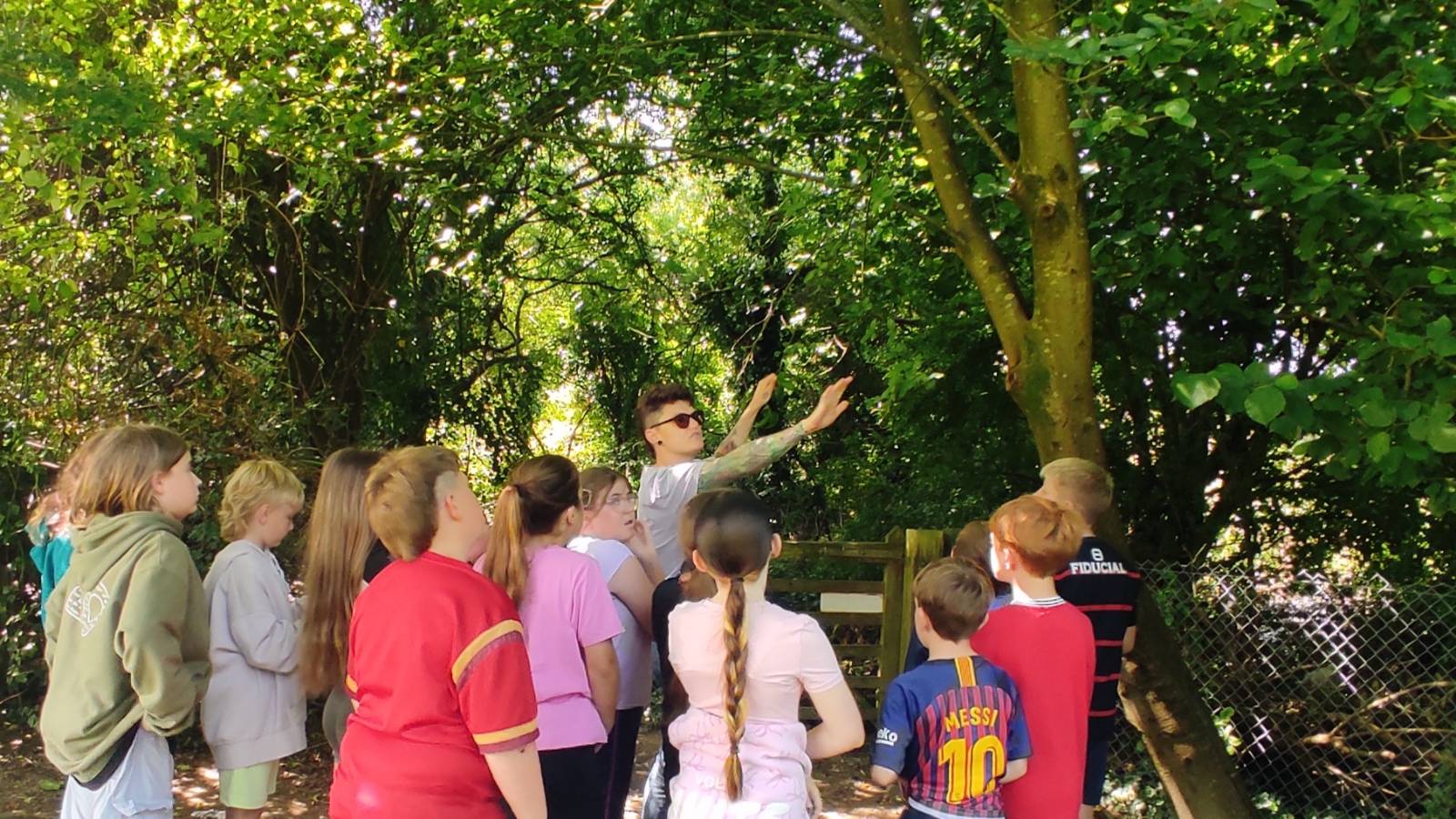
Ceredigion Nature Partnership had commissioned Cardished to build some wildlife habitat, including some Kent-style bat boxes (instructions here).
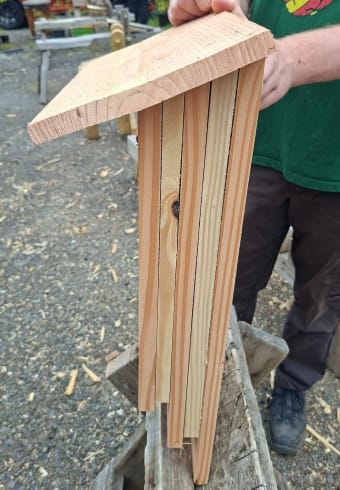 Kent-style bat box built by Harry at Cardished
Jake contacted Naomi Davis from North Ceredigion Bat Group for advice about where to site the bat box, and she very kindly offered to give a bat workshop to the students.
The talk was fascinating and informative, and Naomi had the Field Studies Council Bats guide to show the different types of bat. There are 18 species of bat in the UK, and most of them are “cwtch” bats, in that they roost huddled up together. The Kent-style bat box was designed by Kent Bat Group and is a set of rough boards with gaps between them:
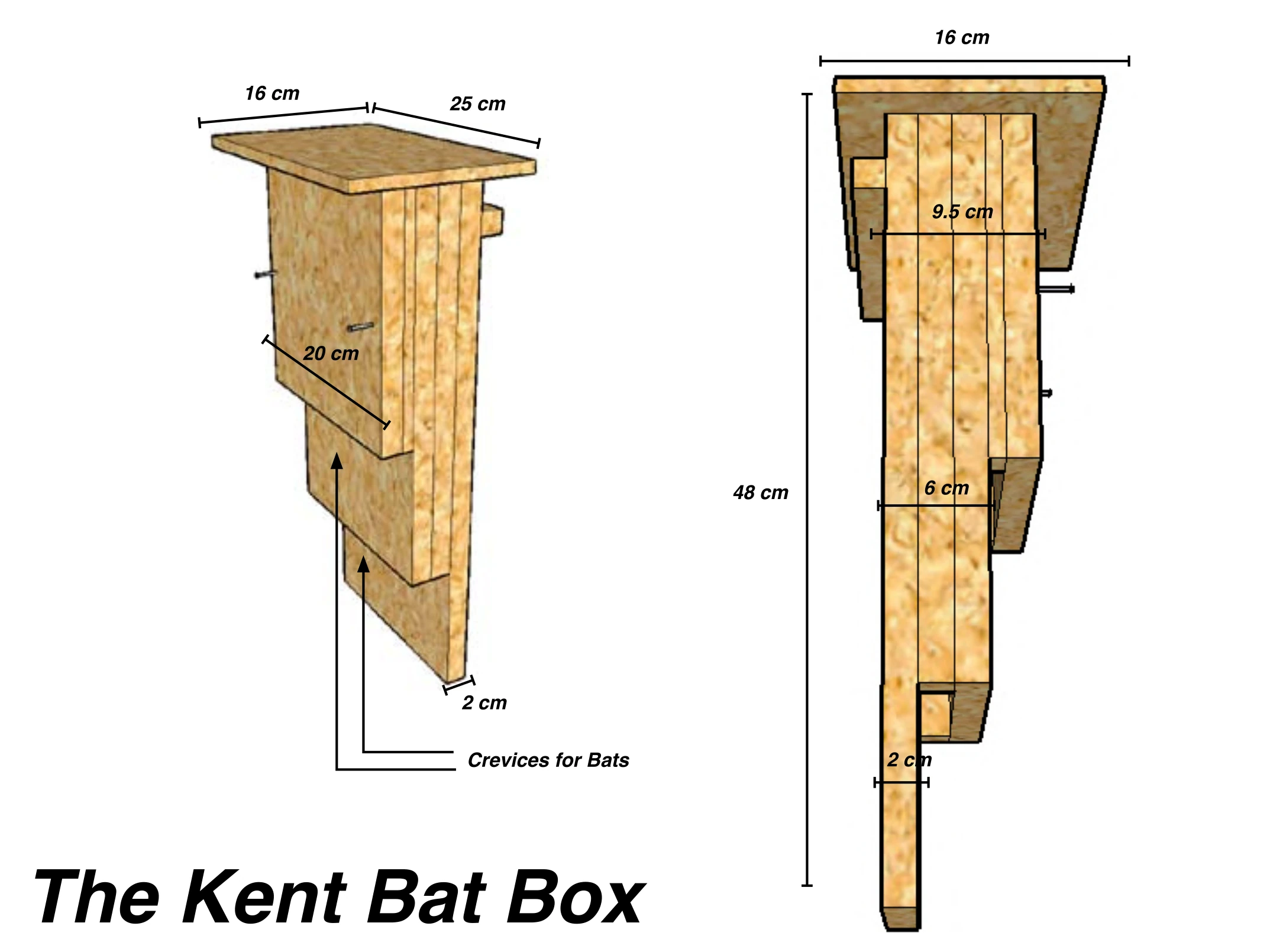 The Kent-style bat box design
The bats climb up the rough wood and roost in the gaps. There are also larger bats that need very particular, larger homes, with different compartments. Bats also cycle their use of roosts, so they won‘t necessarily stay in one roost continually.
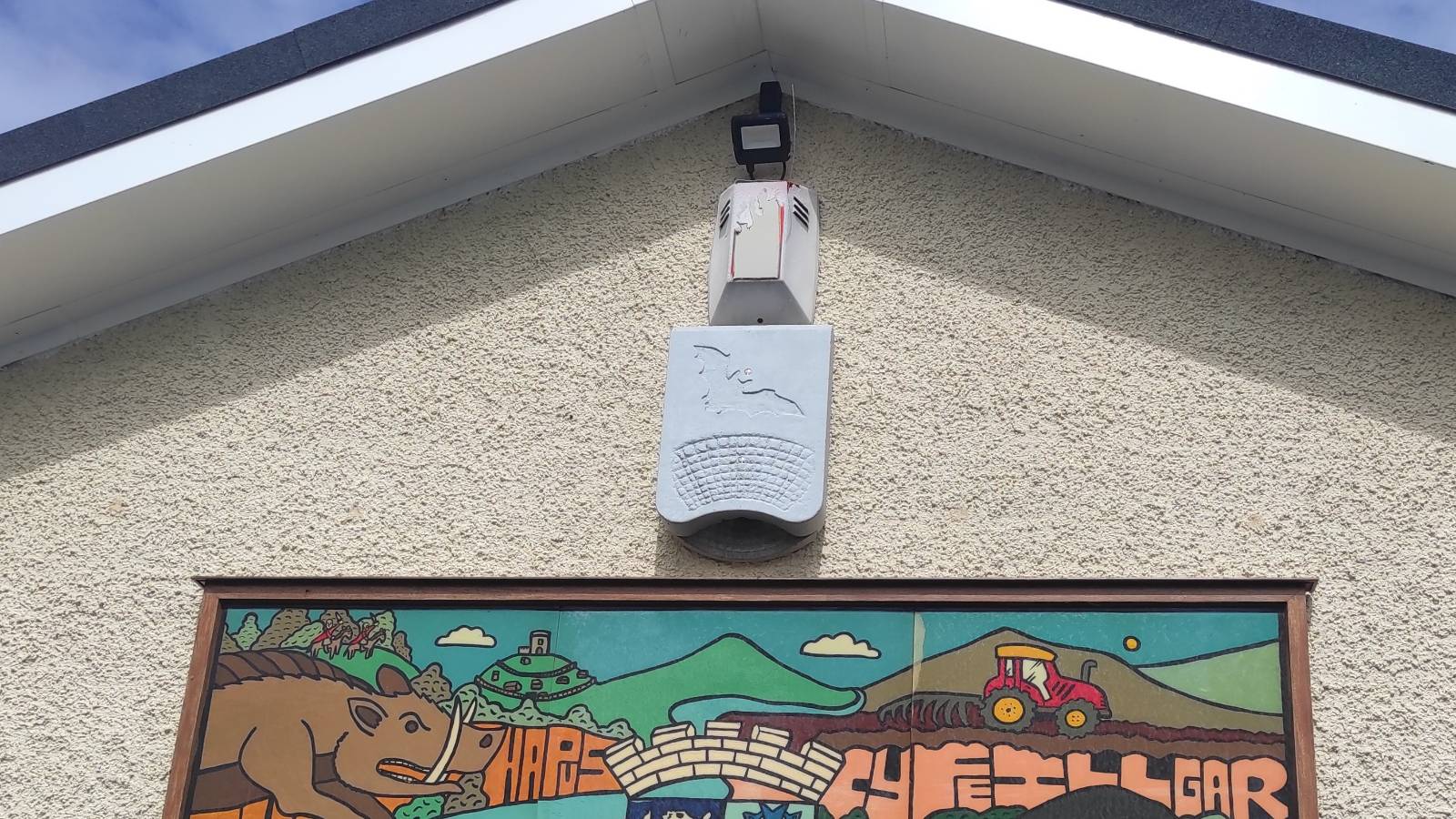 Existing bat box on the entrance wall at Ysgol Llanilar, which doesn‘t seem to be occupied yet
Bats are protected species, so you need to be licensed to open a bat box. The easiest way to tell if a bat box is inhabited during the day is a tell-tale pile of bat poo and insect wings on the floor beneath the box.
Ysgol Llanilar is ideally placed in the heart of a mosaic of habitat: next to a big village pond with lots of aquatic insects, by a long cycle track covered with trees, providing a perfect aerial corridor and feeding site for bats, next to the river Ystwyth, and surrounded by fields and woodland.
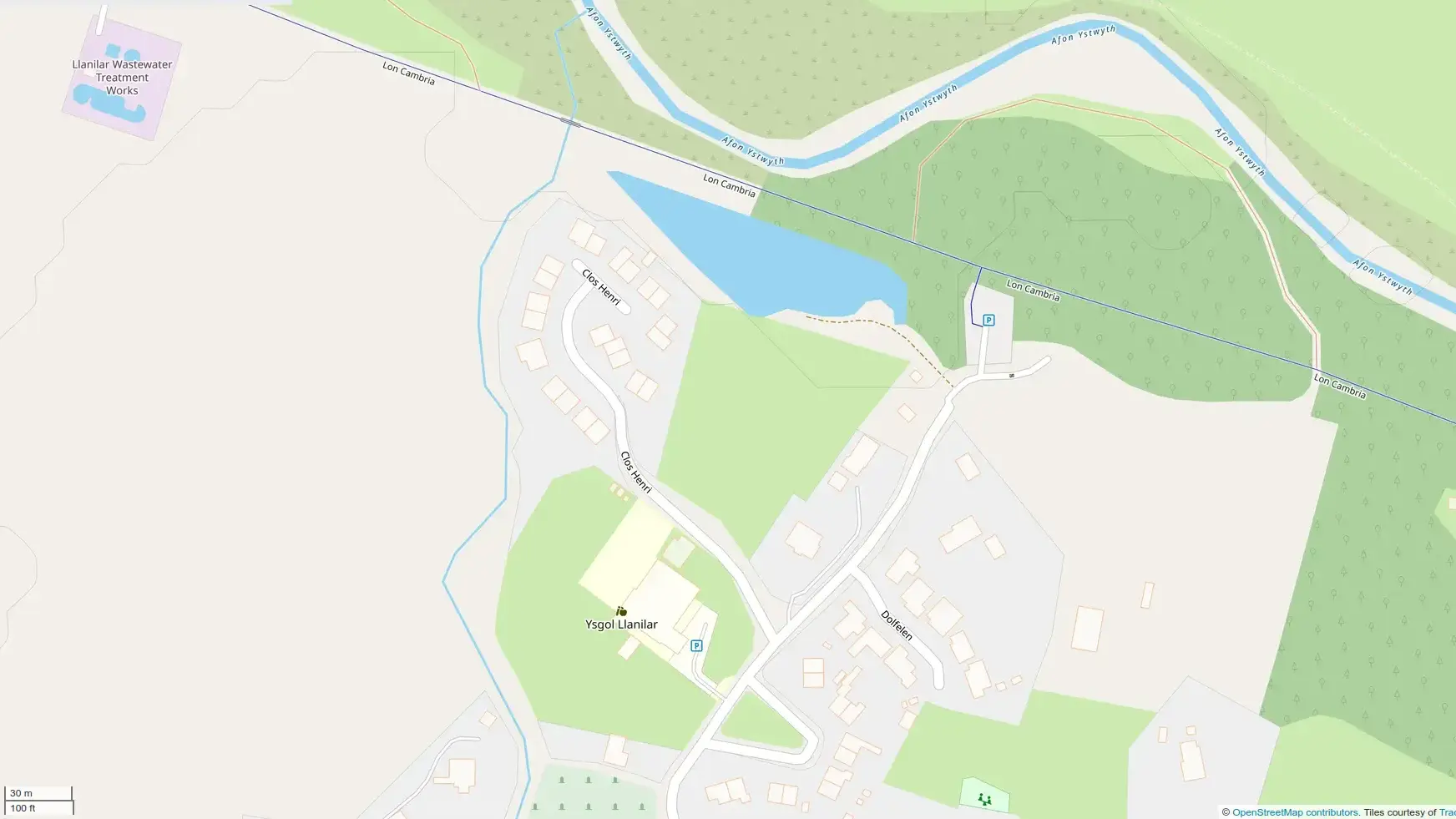 Map showing the variety bat-friendly habitat around Ysgol Llanilar
We went for a walk around the village pond, where Naomi pointed out how fissures and holes form in mature trees, to provide roosts for bats in the wild. And then, along the cycle path and to the river.
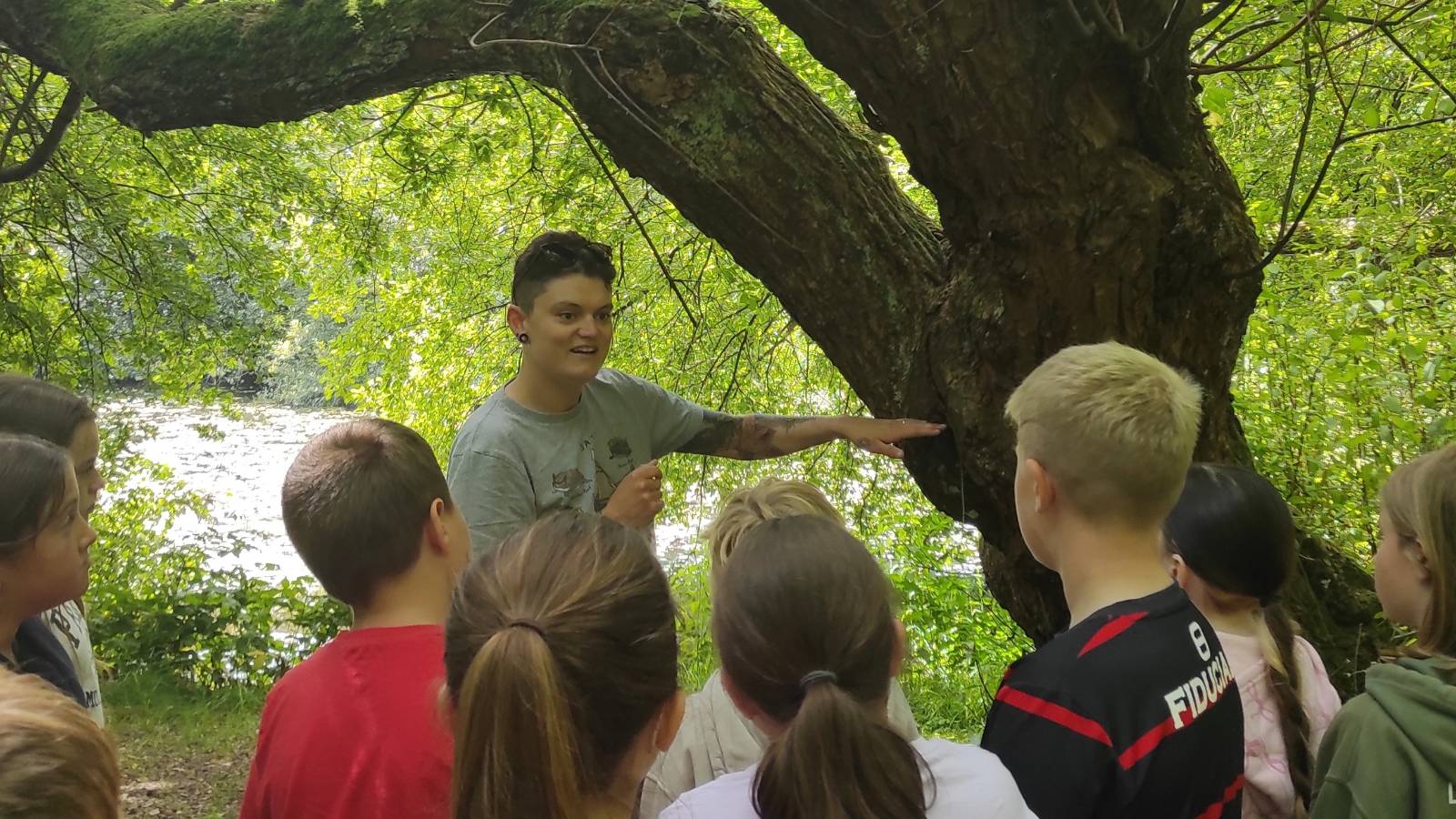 Naomi Davis showing potential bat habitat on a willow tree
Naomi thought that bats probably living in the area would include the medium-sized Brown Long-eared Bat (Plecotus auritus), Daubenton‘s Bat (Myotis daubentonii), which catches flies in the water with its feet, and the tiny Pipistrelle (Pipistrellus pipistrellus), which is the size of an adult’s thumb and weighs about 5 grams, the same as a 20 pence piece.
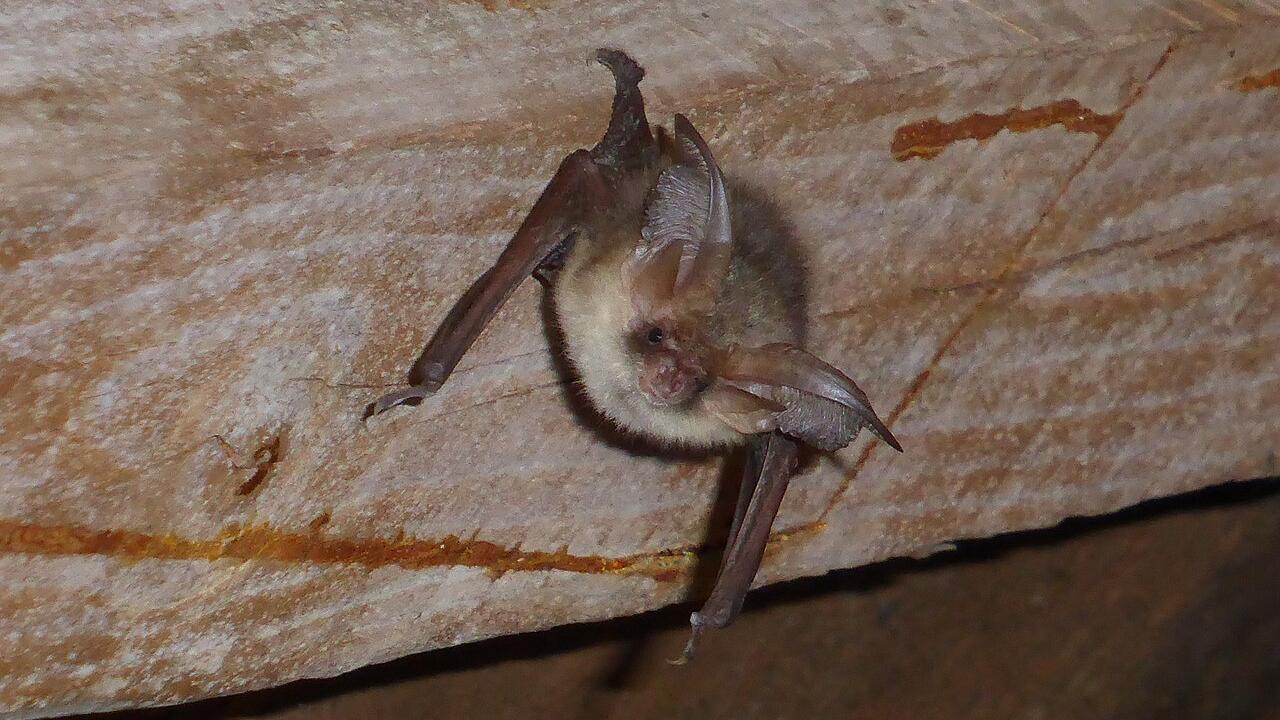 Brown Long-eared bat, photo by Tommy Andriollo on Wikimedia
Different sized bats eat different sized insects, so Pipistrelle‘s eat midges, medium sized bats like the Brown Long-eared bat will eat moths and large bats will eat beetles. So, if you‘re gardening for bats, you need to create different habitat for different invertebrates.
We ended the workshop looking for a place to fix our Kent-style bat box, and Naomi found a perfect, upright mature tree at the back of the school. Ideally, the box should be fitted at about 4 metres high, away from artificial light and sheltered from strong winds. For more information about bat boxes, see the Bat Conservation Trust website.
For the grand finale, Naomi explained how to tell the difference between bat poo and mouse poo, as they superficially look the same. Mouse poo is squidgy, whereas bat poo, because of their diet of insects, is full of chitin and crumbles into dust when rubbed between your fingers, and will often sparkle. One of the students exclaimed “Rainbow poo 🌈”!
Don’t forget to wash your hands! 🧼